- Making Connections
- Posts
- 🌱 Kitchen conversations

Here’s your 3 insights in 3 minutes.
🧑🍳 Kitchen Conversations
This is not your average zoom call.
Most people go their entire lives surrounded by people who don't actually know them.
A therapist describes relationships like a house:
Sidewalk = acquaintances
Front porch = casual friends
Living room = people you let in a little
Kitchen = people closest to you who see your real stuff
Bedroom = reserved only for your partner
Most people have a full living room of "friends."
But very few people in their kitchen.
That's where the most fulfilling relationships live. And the most fun too.
I personally used to default to lone wolf mode. Head down, grind, figure it out alone. I told myself that was discipline.
Looking back, it was just a different way of keeping people on the porch.
What changed was finding groups where kitchen-level conversations were the default.
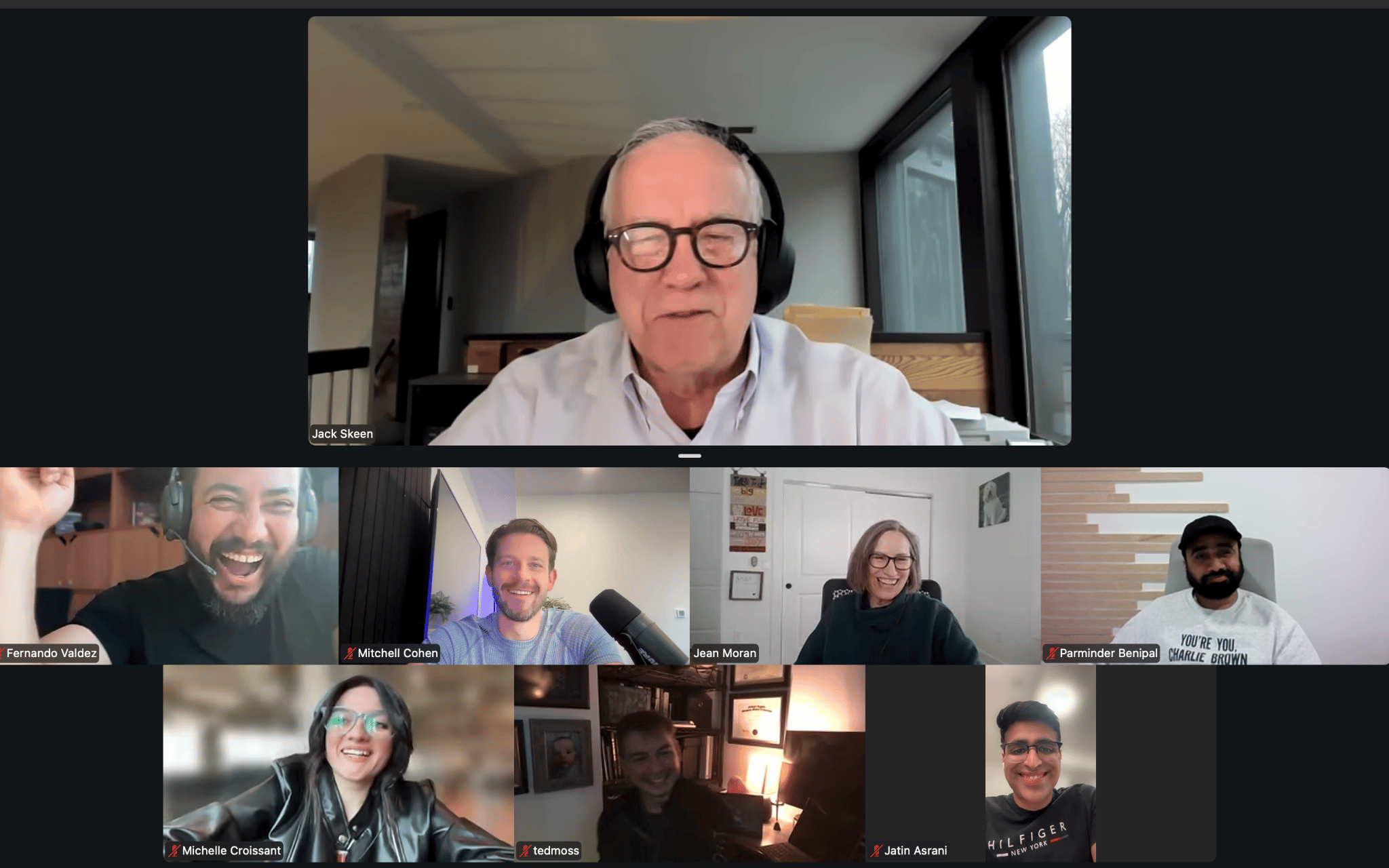
This is a biweekly call I'm a part of, led by Dr. Jack Skeen, a psychologist and coach who has worked with Fortune 1000 executives and founders for decades.
He calls this group "the neighborhood".
People from all over the world. Different ages, backgrounds, industries. All people who went through Jack's roadmap process and kept showing up.
Nobody is performing. Nobody is networking.
Everyone is in the kitchen.
Consistently the most real conversations I have all month.
Most weeks are full of porch conversations. How often do you get into the kitchen?
📊 Compounding Content
Funny pattern I see with companies creating content.
Most will spend a year “doing content” and still not have a single channel that compounds.
When I ran the growth content at AppSumo, we got there in 6 months. (Now I believe you can do it in <90 days.)
The root problem is almost always the same: treating every channel like it's interchangeable.
Cross-posting the same content doesn't work. Each channel has its own nuances. On LinkedIn it's the hook. On YouTube it's the title, thumbnail, and intro. And so on... Miss those and the content flops regardless of how good the idea is. You have to experiment natively on each one, which means actually understanding it.
The approach I'd use instead:
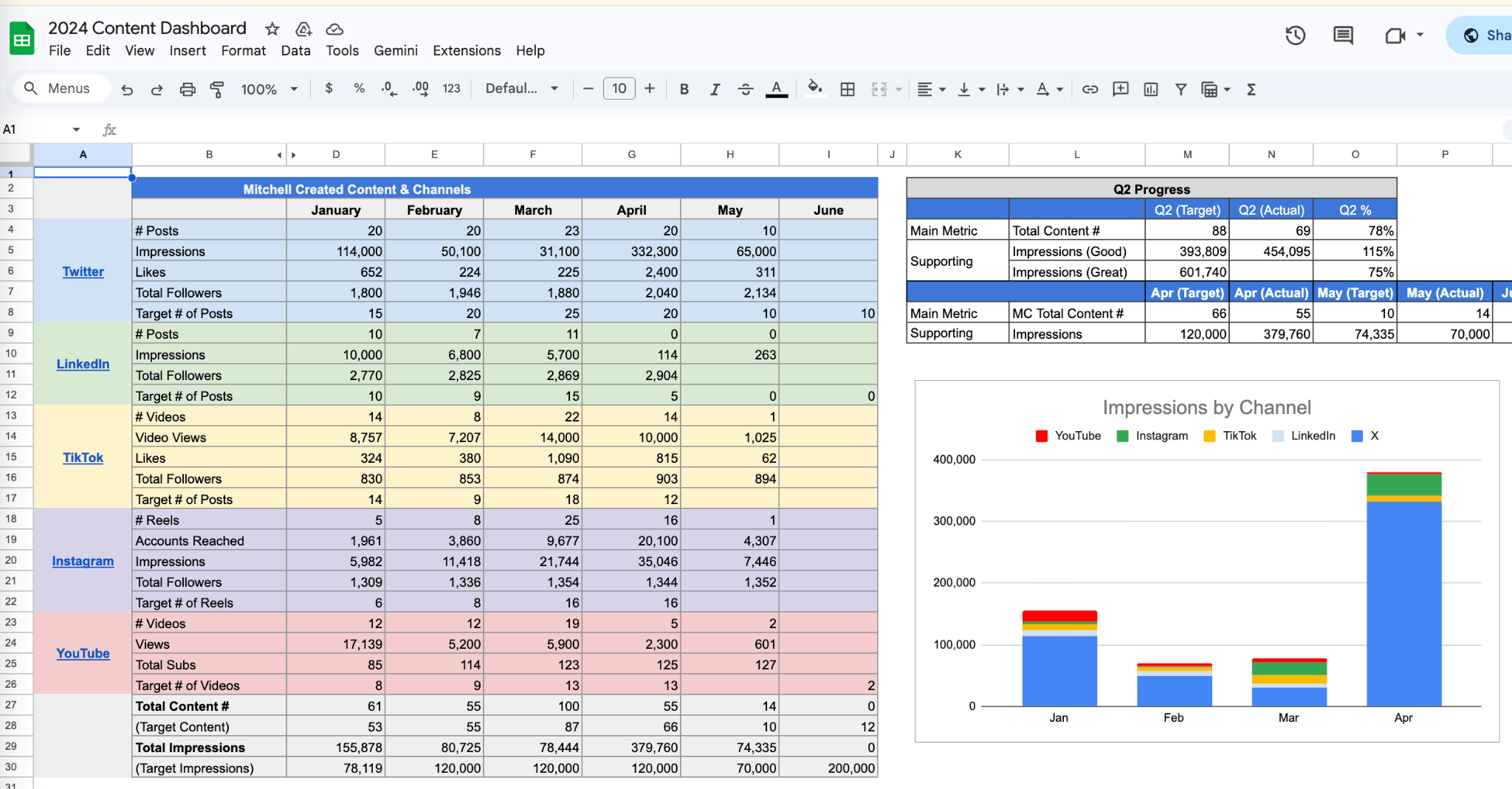
Set up a simple dashboard, run quick scrappy tests across a few channels, and look for outliers. When something pops, stop splitting effort and go deep on that one.
We called this "Test, Then Invest" at AppSumo.
I set up this dashboard in 2024 when I was running the growth content. The goal was never to run all the channels forever. It was to find the one worth doubling down on. Shortly after, the outlier was obvious.
The first long-form YouTube video we published (in June) got 250,000 views in its first month (compared to a channel average of ~2k views per video). It was after going deep on YouTube and creating content specifically for our ICP.
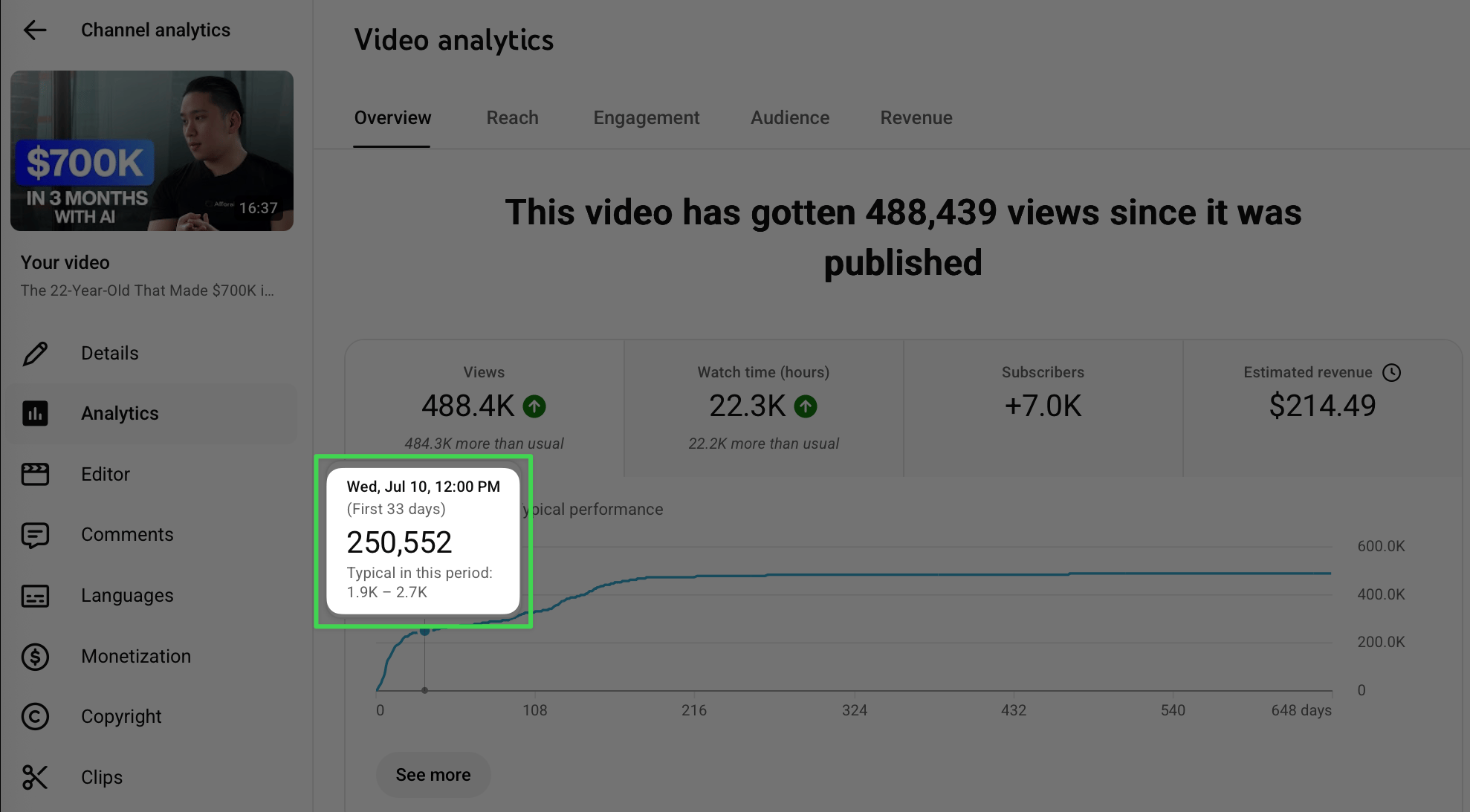
We found the outlier, then doubled down with 50 more of those videos (playlist here).
Right now there are companies hiring for Head of Content to own all the channels: IG, Linkedin, YouTube, TikTok, X, blog, etc. All from day one. That person is set up to produce a lot of content but probably master none of it.
With AI and fractional hiring, there's a smarter path: bring in a specialist who can go deep on one platform fast, find what works, then build the flywheel from there.
I just made a simple version of this dashboard for anyone to use. (And yes, it's color coded.) Here’s the template for you to make a copy.
Find the signal.
Then build the system around it.
🧩 Depth vs Breadth
“Compound interest is the eighth wonder of the world.”
Everyone wants compounding.
In content.
In relationships.
In finances.
But it doesn’t come from doing more forever.
It comes in two phases.
First, you explore.
Try different channels. Different ideas. Different people.
(You likely need to try more than you think here. Volume is your friend.)
After enough volume, or sometimes luck, something shifts.
Instead of restarting, you stay.
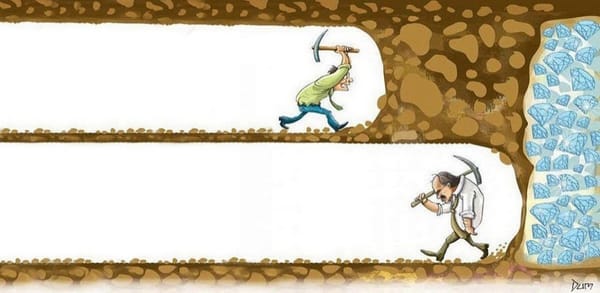
Most people stop before it compounds.
Test fast. Then stay longer than most people would.
Salud,
Mitchell